


Date: 16-10-2026
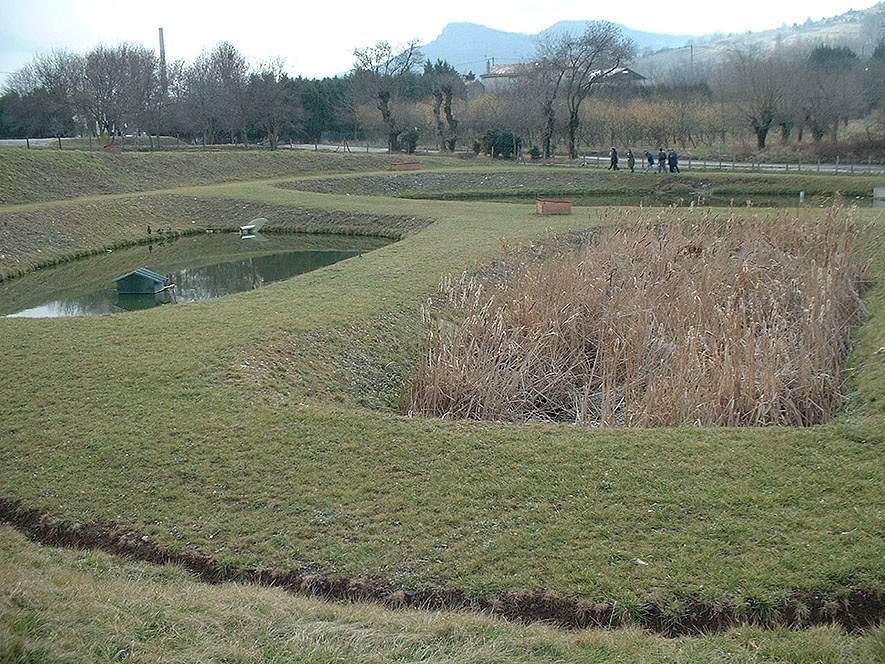
MSCA PhD position: Predictive Modelling of Pathogen Removal in Treatment Wetlands and Post-Treatment Storage Systems for Safe Wastewater Reuse
Calendar
- Call opening: 15th October 2026
- Deadline to submit applications: 31th December 2026
- Ranking and interviews: April-May 2027
- Selection of candidates: May-June 2027
- Foreseen start of fellowships: September-October 2027
Detailed description of UT3 position (UT6)
Université de Toulose (UT3) is recruiting a researcher within the Horizon Europe Marie Sklodowska Curie Co-Fund doctoral network TERRA-MED (An Interregional PhD Programme for Advancing Sustainability and Climate Resilience in Occitania, Balearic Islands, and Catalonia). The successful candidate will carry out a joint doctorate (duel degree) in University of Toulouse (programme “Sciences de l’Univers, de l’Environnement et de l’Espace”) and University of Girona (programme: “Water Science and Technology”).
Workplace: Université de Toulouse (UT3), Toulouse, Occitania, France. Secondment in Universitat de Girona (UdG) / Catalan Institute for Water Research (ICRA), Girona, Catalonia, Spain.
Main supervisors: Magali Gerino (CRBE, Université de Toulouse) and Ludovic Pilloux (LGC, Université de Toulouse). Contact: magali.gerino@utoulouse.fr; ludovic.pilloux@utoulouse.fr. Co-supervisors in Girona: Dr Joaquim Comas (UdG, ICRA) and Dr Gianluigi Buttiglieri (ICRA). Contact: joaquim.comas@udg.edu.
Project duration: 3 years
Research objectives. The project stands at the intersection of water and food security, with a strong contribution to climate resilience: safer, de-centralised water reuse reduces pressure on freshwater resources and supports climate-adapted irrigation in a Mediterranean region increasingly exposed to drought. This doctoral project will pursue the following objectives:
- To elucidate the mechanisms of pathogen removal in treatment wetlands — including filtration, predation and biofilm dynamics — and how these evolve.
- To develop a novel hybrid mechanistic/machine-learning model simulating pathogen transport, persistence and regrowth, from treatment to storage;
- To validate this framework against long-term operational datasets from demonstration sites in France and Spain;
- To translate these findings into an operational decision-support tool, by integrating the produced models into Nat4Wat, a platform already used by practitioners and public authorities.
Expected results
- A validated hybrid predictive framework for pathogen dynamics in nature-based water reuse systems.
- New pathogen-risk modules integrated into the Nat4Wat platform, extending its capacity to jointly assess treatment performance, ecosystem services and microbiological safety.
- Concrete recommendations for the safe design and management of treatment wetlands and storage systems, supporting compliance with EU water-reuse regulations and the development of decentralised reuse strategies across the Mediterranean area.
Benefits. Indicative monthly gross salary: 2.450-2.550€ (net salary + employee’s taxes and contributions).
Indicative mobility arrangements: Hosting institution: 18-24 months (University of Toulouse-UT3, France). Co-hosting institution secondment: 9-12 months (University of Girona, Spain). Non-Academic secondment in France or Spain: 3-6 months.
Requirements for candidates. Candidates must meet the following mandatory requirements:
- Applicants must be eligible for enrolment in a doctoral programme at the employer institution and must not already hold a doctoral degree at the date of recruitment. Detailed information is provided on UdG Doctoral School website.
- Have not resided or carried out their main activity (work, studies, etc.) in France for more than 12 months in the 36 months immediately before their recruitment date, and
- Have fluency in English (B2 level minimum)
Skills and competences: Background in environmental engineering, microbiology/microbial ecology, water sciences or a related field, with a strong interest in wastewater treatment and reuse; Aptitude for quantitative and modelling approaches (mechanistic and/or data-driven / machine learning), ideally with programming skills (R, Python or similar); Experience with laboratory and/or field experimental work (microbiology, water quality analysis) is an asset; Strong motivation for interdisciplinary, international research, autonomy, and good written and oral communication skills in English (B2 minimum).
TERRA-MED doctoral network. TERRA-MED is an interregional doctoral program funded under the Marie Skłodowska-Curie COFUND Actions that will recruit and train a new generation of researchers to address the sustainability and resource stress (Water–Land–Energy nexus) in Mediterranean territories. The Euroregion Pyrenees–Mediterranean, coordinator of the program, brings together the Regions of Occitanie (France), Catalonia and the Balearic Islands (Spain) forming a cross-border research ecosystem. Through this collaboration, TERRA-MED connects world-class universities, research centres and socio economic actors committed to advancing resilience in the face of climate change. With more than 22,000 scientists across 10 universities and 2 research centers, encompassing 1000 research units, TERRA-MED provides a rich, interdisciplinary environment where doctoral candidates can excel and launch their research careers. 33 PhD positions will be offered to early-stage researchers with a unique interregional, interdisciplinary and intersectoral environment. Fellows will benefit from having two supervisors (a principal supervisor and a co-supervisor) from two different regions and having a non-academic mentor. The fellows will undertake mandatory cross-border or international stays to the co-institution, as well as a secondment in a non-academic entity. Moreover, doctoral candidates will receive a specifically designed training program related to their research topics, alongside modules on innovation, entrepreneurship, project management, ethics, open science, etc.